|
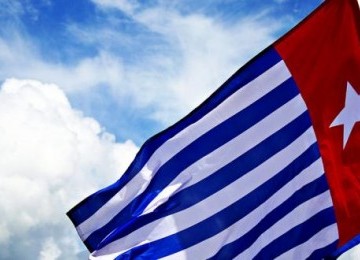
| Papua Human Rigths (foto PMC) |
After a period of Dutch control, possession of West Papua was handed to Indonesia in a deal brokered by the US. This deal, known as the New York Agreement of 1962, promised West Papuan self-determination which led to the 1969 Act of Free Choice. This act, later branded as the “Act of No Choice”, was stripped of any legitimacy as a little more than 1000 hand-picked West Papuans representing a population of close to one million voted unanimously under military threats and coercion to retain Indonesian sovereignty. Reported incidents of human rights abuses inflicted on the West Papuan people at the mercy of the Indonesian military includes widespread violence, killings, torture, disappearance, rape, sexual violence, transmigration schemes, forced relocation, and the spread of infectious diseases such as HIV which has seriously harmed the existence of the West Papuan people. This article is a newspaper analysis of the Jakarta Globe, The New Zealand Herald
, and The Sydney Morning Herald
media coverage. Nigel Moffiet reports. ANALYSIS: It can be argued that Indonesian abuses in West Papua are crimes consistent with the 1948 Convention on the Prevention and Punishment of the Crime of Genocide as a consequence of exploitation, transmigration, West Papuan displacement, targeted military brutality at West Papuan communities, and the systematic spread of infectious diseases. Given genocide is not a term to use lightly extreme caution must be made in using the label so as to avoid “the risk of setting up taxonomies of genocide, or opening crucial space in debates for re-engaging precisely the kinds of discourses that enable and naturalise it in the first place” (Banivanua-Mar, 2008, p. 586). Yet, the debate is taken seriously with the interests of ‘prevention and restitution rather than simply definition in order to “more effectively work backwards to a deeper and more practical understanding of how genocide happens” (Banivanua-Mar, 2008, p. 596-597). In this context, I also carry out media analysis and reportage of West Papuan human rights abuses and the question of genocide by
The Jakarta Post, The New Zealand Herald, and
The Sydney Morning Herald.
Analysing human rights abuses within West Papua involved searching for the words “West Papua” and “genocide” within the archives of the three newspapers’ respective search engines. Surprisingly, the
Jakarta Post had the most content fitting this description with 25 articles, followed by the
Sydney Morning Herald with five articles and
The New Zealand Herald with six.
Exploitation of West Papuan land and resources The province of West Papua is rich in natural resources and since Indonesian rule government and military officials have been involved in the extraction this wealth through mining and forestry. The consequences of this exploitation has been dire for the Papuan people and has led to human rights abuses as observed by West Papuan campaigner John Rumbiak who stated that “all abuses in West Papua were caused by military and police presence aimed at protecting mining firms, forest concessions and timber estates exploiting natural resources”(Wing & King, 2005, p. 2).
Part of the systematic abuse towards the Melanesian people of West Papua included denying them the right to work or gain any wealth from their own natural resources in favour of generating work and wealth for the Indonesian Javanese population. On a 1980 visit to West Papua, a US professor noted a “planned influx of Indonesian workers, including more than 2000 families that were scheduled to be ‘dropped’ near two major oilfields in order to implement a ‘policy of non-employment of Melanesians in the oil industry’” (Brundige et al, 2004, p. 26). This is also evident in the US-owned
Freeport copper mine which in 1982 employed 452 expatriates, 1859 Indonesians, and only 200 Papuans who were employed as unskilled laborers” (Brundige et al, 2004, p. 26).
Intensifying the problem is the relocation of villages due the seizure of land. In June 1980, the Amungme tribe from the Tembagapura region were relocated to a coastal area that had widespread malaria creating an epidemic that killed 216 children. Freeport failed to provide food or medicine during the epidemic and the Indonesian government failed to assist despite the official acknowledgement of the epidemic” (Brundige et al, 2004, p. 26-27).
The exploitation of West Papua’s timber resources and exploitation of West Papuan labour is another problem with evidence of serious breaches of human rights. One of the documents of abuse includes the relocation of the Asmat tribe from the southern coast of West Papua by Jakarta-based timbre companies. The Asmat people were forced into compulsory labour which included the deforestation of their own land at below-subsistence wages with threats of arrest for those who refused to work. This relocation and enforced labour within the timber industry had such an impact that an Indonesian environmental group warned that the Asmat people were “on the brink of cultural starvation after a decade of enforced ironwood logging” (Brundige et al, 2004, p. 28).
A major 2005 report by Indonesian based environmental organisation Tilapia and the UK and US-based Environmental Investigation Agency found that the Indonesian military and government officials are involved in the illegal smuggling of up to 300,000 cubic meters of timber a month from Papua to China. This illegal smuggling is valued at more than US $1 billion (Wing & King, 2005, p. 4).
Transmigration and West Papuan displacement As well as forcing many West Papuan tribes and communities from their land in order to exploit natural resources, Indonesia has also carried out systematic transmigration policy that has been designed to strip the West Papuan people of their identity making them minorities on their own land. By the end of 1984, the Indonesian government had set up 24 transmigration sites across 700,000 hectares of reappropriated West Papuan land. This resulted in 27,726 Indonesian families relocating on West Papuan land; close to 140,000 people over 10 years. Further more, the Indonesian government required that “Papuans be dispersed, with one Papuan family to every nine Javanese families, thus ensuring that the Papuans would become a minority in each area” (Brundige et al, 2004, p. 33).
This has resulted in the marginalisation of West Papuans within the cities as second class citizens to the extent that “propaganda posters sponsored by the ‘Project for the Guidance of Alien Societies’” urged the Papuans to relinquish their inefficient and primitive ways for the superior lifestyle of the Indonesians (Brundige et al, 2004, p. 34). As well as marginalisation within their own communities, transmigration has “led to the loss of traditional lands and forests where once local tribes used to hunt and gather food. There is no transfer of knowledge and technology to substitute for lost basic rights’ (Wing & King, 2005, p. 4).
Increased presence of Indonesian military In a 2005, in a University of Sydney report for the West Papua Project, it was concluded that “the Indonesian armed forces (TNI) in Papua are the main source of suffering and instability in the province” (Wing & King, 2005, p. 2). Human rights abuses carried out by the Indonesian armed forces is only escalating as troop build up in the West Papuan region continues with incidents of rape, torture and extrajudicial killings. In 1981, the Indonesian military launched Operation Clean Sweep which resulted in rapes, assaults, killings, and looting of villages if anybody was suspected to be part of the Papuan independence movement Organisasi Papua Merdeka (OPM) (Brundige et al, 2004, p. 29). The operation aimed to “intimidate those suspected of supporting the OPM and to cleanse the boarder regions of Papua to make room for Javanese migrants”. Survivors of the operation reported that “whole families had been bayoneted to death and their bodies left to rot”. The Indonesian military also had the slogan: “Let the rats run into the jungle so that the chickens can breed in the coop.” By the summer of 1981 the operation escalated into the Central Highlands of West Papua were the Indonesian armed forces responded to suspected OPM activity by bombing the village of Madi in the Paniai basin. The attack included the use of napalm and chemical weapons against the villagers and killed at least 2500 people with estimates that the death toll could have even reached 13,000 (Brundige et al, 2004, p. 29).
Since then, Indonesian troop buildups have continued and between 2005 and 2009 up to 15,000 extra troops were deployed throughout the West Papuan region (Wing & King, 2005, p. 13). The result of this military buildup is that there is an increased level of human rights abuses and violent clashes between resistant West Papuans and the Indonesian military. This is catastrophic for local communities as the incidents are “used to justify the deployment of new troop reinforcements, which in turn lead to greater human rights abuses, reaction from aggrieved Papuans, then further militarisation. A dangerous and destructive spiral is thus perpetuated” (Wing & King, 2005, p. 7).
The spread of serious disease and HIV/AIDS The disruption and upheaval to traditional West Papuan existence brought about through Indonesian colonisation and exploitation of the regions natural resources has also led to the spreading of serious disease. A Dutch missionary working in West Papua during the 1980s said infant mortality rates in the region were above 60 percent, and the average life expectancy no more than 31 years (Brundidge et al, 2004, p. 34). Of grave concern is the spread of HIV infection which is rising dramatically in the region to the extent that 40 per cent of Indonesia’s HIV and AIDS cases were located in Papua despite accounting for less than one per cent of Indonesia’s population. Another figure from 2002 shows that just over 20 people per 100,000 were infected with HIV in Papua, compared to only 0.42 people per 100,000 in the rest of Indonesia (Brundige et al, 2004, p. 34). Much has been suggested of Indonesia’s responsibility for the spread of such disease throughout the Melanesian population to the extent human rights groups say the spread of HIV is the result of systematic attempts to destroy the Melanesian population of West Papua. Interviews conducted with workers in Jayapura and Merauke who deal with prostitution and the spread of HIV suggest clear evidence “that there is security force involvement in prostitution at different levels” (Wing & King, 2005, p. 8). Leo Mahuye, a health worker in Merauke says HIV is spread by prostitutes who are brought in by the military to the extent that there is “an indication it is systematic killing…[a]s long as they are importing these women, as long as the military and the police back these activities here, they are committing killings” (Butt, 2005, p. 413).
The Jakarta Post Searching for the words “West Papua” and “genocide” on
The Jakarta Post’s online search engine returned 21 relevant articles between 2001 and 2011 relating to genocide and human rights abuses in the region. The articles were a mix of 14 opinion pieces and six news reports, as well as one question and answer article with West Papuan human rights campaigner John Rumbiak.
Of these 21 articles, one opinion piece and one news report both addressed the issue of genocide in the headlines. The first article published on 8 January 2001 titled “Is Indonesia becoming a genocidal society?” and despite its title it does more to contextualise the nature of genocide throughout history rather than draw any strong conclusions on West Papua. The article references the nature of genocide in Germany, Yugoslavia, Rwanda, and Burundi and makes the statement that the “cycle of genocidal society, which is already apparent in Maluku and other regions, must be broken by effective law enforcement measures”. The article makes this statement without any reference to West Papua or without further contextual evidence to back the statement up.
An article published on 19 August 2005 titled “RI condemns report by Aussie researchers on genocide in Papua” does more to address human rights abuses and genocide in West Papua in light of the University of Sydney’s Centre for Peace and Conflict Studies report
Genocide in West Papua? The article provides diverging view points with Indonesia’s foreign ministry spokesman, Marty Natalagawa, calling the report “baseless” and Indonesia’s deputy military spokesman, Bibit Santoso, labeling the report “incorrect and untrue”. Yet the article uses more space quoting from the report and the centre’s director Stuart Rees, who says even though he is cautious using the word “genocide” this “significant document details the destruction of a people, their land and prospects”. The article also quotes one of Papua’s leading church figures, Rev. Socratez Yoman, who talks of the Indonesian military intimidation and says wherever there are Indonesian soldiers, “the militia and jihadists are there too. They are inseparable.”
There were five remaining news articles which addressed human rights abuses in West Papua and the issue of genocide through the sources that had been quoted. An article published on 8 April 2006 titled “Netherlands ‘respects’ RI territorial integrity” does little to address the issue of human rights abuse in West Papua rather it focuses mostly on the Dutch Prime Minister Jan Peter Balkenende’s recognition of Indonesia’s territorial integrity including Papua’s integration into Indonesia. It also focuses on Indonesian criticism of Australia’s decision to grant temporary visas to 42 Papuan asylum seekers. In this criticism the article mentions the Papuan activists have accused Jakarta of genocide.
A news article published on 20 May 2006 titled “RI asks Australia to recognise territorial integrity in treaty” focuses on Indonesia’s effort to ‘get assurances that no neighboring country will support the succession of Papua from Indonesia’ and asking for Australia to “express its commitment to Indonesia’s territorial integrity in a written agreement”. Once again the article does little to address issues of human rights in the region by failing to quote West Papuan sources. It only puts some context to the story by saying that the “Papuans, including pro-independence activists and their families, have accused Jakarta of ‘genocide’ in Papua”.
The remaining articles focused more heavily on human rights abuses and the question of genocide. A news article published on 9 June 2007 titled “Papuans greet UN envoy with rallies, demands” focused on the visit of UN Secretary General on Human Rights Defenders Hina Jilani’s visit to the region. The article draws many sources and quotes around human rights abuses and the issue of genocide quoting West Papuan’s who had pleaded with Jilani and the UN to “stop the genocide of the Papuans” and “stop the killing in west Papua”. An article published on 27 January 2011 titled “RI, int’l public push for civilian court for torture” focuses on the torture of two West Papuan and calls for the Indonesian soldiers who committed the torture to be tried in a civilian court rather than an Indonesian military tribunal. Lastly an article published on 18 October 2011 titled “ 5000 attend 3rd Papuan people's congress” focuses on the congress looking at the issue of human rights abuses in the region. It quotes organizing chairman Selpius Bobii who says “we greatly need support and solidarity from every party that upholds the values of democracy, basic human rights, honesty and justice for the sake of protecting the people of Papua from genocide”.
The remaining opinion pieces provided various forms of context to the human rights abuses in West Papua written mostly by outside observers. The most critical opinion piece was written by Roman Catholic Priest Neles Tebay on 28 September 2006 titled “More questions for the ICG on Papua issue”. The article strongly criticises the findings of the International Crisis Group who denied allegation of genocide in West Papua and downplayed any human rights abuses in the region. Tebay asks “what was or were the true intent(s) of the military operations conducted against the Papuans then, if not to wipe out the people in whole or in part?”
Finally, a question and answers article with West Papuan human rights campaigner John Rumbiak on 24 March 2000 titled “No letup in security approach spells trouble in Irian Jaya” does a lot to provide context and a West Papuan view point to the situation in the region. It adds context to the abuses with reference to the 1969 Act of Free Choice and the political circumstances surrounding the act and Rumbiak articulates West Papuan grievances on a number of levels.
The New Zealand Herald Searching for “West Papua” and “genocide” on
The New Zealand Herald’s online search engine drew only five relevant articles dating from 1999 (two articles have not been dated). Of these five articles, two are opinion pieces by Auckland Indonesian Human Rights Committee spokeswomen Maire Leadbeater, one is an opinion piece by former President of East Timor Jose Ramos-Horta, one news piece that briefly mentions Yosepha Alomang’s award for her “resistance against the destruction of rainforest, rivers and local culture caused by decades of gold mining in West Papua”, and another article that questions the right of four Indonesian military officers to study at Massey University in light of Indonesian military brutality.
Maire Leadbeater’s article (undated) titled “On the brink of genocide” is critical of the Pacific Islands Forum leaders' failure to address the issue of West Papua. In the article she contextualises West Papua by drawing parallels to East Timor and by mentioning the 1969 Act of Free Choice and the consequences of the act. She draws on human rights estimates that 100,000 Papuans have been killed as a result of Indonesian military brutality and she references The University of Sydney’s Centre for Peace and Conflict Studies report to make her claim that the situation in West Papua is approaching genocide.
Leadbeater’s second article (undated) “West Papuans Face Masters of Terror” cited the Yale report to draw attention towards crimes against humanity including “torture, disappearance, rape, extra-judicial killings and destruction of resources” and that the report “strongly indicated a breach of the United Nations genocide convention”.
Jose Ramos-Horta’s opinion piece on 13 September 1999 titled “A terrible price to pay for freedom” again draws a parallel between West Papua and East Timor and raises the question of crimes against humanity, including genocide.
The Sydney Morning Herald Searching for “West Papua” and “genocide” on
The Sydney Morning Herald online search engine retrieved five relevant articles including two opinion pieces and three news articles between 2007 and 2011.
An opinion piece by Jennifer Robinson on 12 September 2011 titled “Leaks reveal it’s past time to speak for West Papua” draws attention to human rights abuses in the region and the level of surveillance and lack of transparency for journalists and human rights watch groups. On a visit to West Papua for a human rights group she mentions she was warned by an Australian diplomat that her “human rights work risked ‘becoming a political football'’ for [the Australian] government and that [she] was to ‘'keep [her] head down’”.
An opinion piece by Greg Poulgrain on 31 December 2009 titled “Oil and politics prove fatal mix for the people of West Papua” draws on West Papua’s colonial context since the Dutch and states that “[m]ilitary dominance in West Papua began in the 1960s and documents released under freedom-of-information from the US embassy in Jakarta in 1968 refer to the possibility of genocide occurring even then”.
On 18 June 2010 a news article titled “Papuans rally for independence” covers West Papuan protest to “reject the region’s special autonomy within Indonesia and demand a referendum on self-determination”. On 21 November 2009 a news article titled “Death in Papua: political intrigue clouds miner's murder” refers to the killing of an Australian mine worker in West Papua as the result of an Indonesian military assault. And on 27 March 2007 an article titled “Report warns against Lombok Treaty” refers to a security treaty with Indonesia that potentially restricts Australia's ability to speak out about human rights abuses. The article goes on to reference the University of Sydney’s Centre for Peace and Conflict Studies report on genocide in the region and quotes that “Australia will be providing training, funding and material aid to Indonesian forces who are engaged in what many Papuans believe is genocide against their people”.
Conclusion Through widespread violence, killings, torture, disappearance, rape, exploitation of land, transmigration, and the systematic spread of infectious diseases, the West Papuan people are suffering human rights abuses at the hands of the Indonesian military to the extent that the nature of the abuses are consistent with the 1948 Convention on the Prevention and Punishment of the Crime of Genocide. In terms of facing the nature of these human rights abuses and raising the question of genocide directly, the
Jakarta Post was more consistent than either
The Sydney Morning Herald or
The New Zealand Herald in raising these issues within its content.
The New Zealand Herald and
The Sydney Morning Herald both had very limited content raising the question of genocide within West Papua. However,
The Sydney Morning Herald had a more diverse and relevant spread of content in relation to human rights abuses and the question of genocide within West Papua whereas if it was not for the opinion pieces of Auckland Indonesian Human Rights Committee spokeswomen Maire Leadbeater,
The New Zealand Herald would have had next to no content at all on this issue.
Nigel Moffiet researched and wrote this report as an Asia-Pacific Journalism postgraduate assignment at AUT University. References Books and journal articles: Banivanua-Mar, T. (2008). ‘A thousand miles of cannibal lands’: imagining away genocide in the re-colonization of West Papua.
Journal of Genocide Research, 10(4), December, 583-602.
Brundige, E.; King, W.; Vahali, P.; Vladeck, S.; Yuan, X. (2004). Indonesian human rights abuses in West Papua: Application of the law of genocide to the history of Indonesian control. Allard K. Lowenstein International Human Rights Clinic, Yale Law School.
Butt, L. (2005). ‘Lipstick girls’ and ‘Fallen women’: AIDS and conspirational thinking in Papua, Indonesia.
Cultural Anthropology, 20(3), pp. 412-442.
Kirsch, S. (2010). Ethnographic representations and the Politics of Violence in West Papua.
Critique of Anthropology, 30(1), pp. 3-22.
Sautman, B. (2006).
Cultural genocide and Asian state peripheries. New York : Palgrave Macmillan
Wing, J. & King, P. (2005).
Genocide in West Papua? The role of the Indonesian state apparatus and a current needs assessment of the Papuan people. West Papua Project at the Centre for Peace and Conflict Studies, University of Sydney.
News articles: The Jakarta Post (2000). No letup in security approach spells trouble in Irian Jaya
The Jakarta Post (2000). West Papua: Will it become the next East Timor for Indonesia?
The Jakarta Post (2001). Is Indonesia becoming a genocidal society?
The Jakarta Post (2002). Soeharto and the grand scheme of things
The Jakarta Post (2005). RI condemns report by Aussie researchers on genocide in Papua
The Jakarta Post (2005). Founding West Irian Jaya province
The Jakarta Post (2006). Netherlands 'respects' RI territorial integrity
The Jakarta Post (2006). How to protect Papuans -- and RI-Australia ties
The Jakarta Post (2006). RI asks Australia to recognise territorial integrity in treaty
The Jakarta Post (2006). More questions for the ICG on Papua issue
The Jakarta Post (2007). Papuans greet UN envoy with rallies, demands
The Jakarta Post (2007). Indigenous languages in danger of disappearing
The Jakarta Post (2008). The possibility of indicting Soeharto after his death
The Jakarta Post (2008). On Timor Leste's present situation
The Jakarta Post (2008). New strategy behind separatism in Papua
The Jakarta Post (2009). He ain't heavy, he's a brother from Papua
The Jakarta Post (2009). Munir and the protection of rights defenders
The Jakarta Post (2009). Issues: `Who is responsible for poverty in Papua?'
The Jakarta Post (2010). Text your say: Gus Dur or Soeharto?
The Jakarta Post (2011). RI, int’l public push for civilian court for torture
The Jakarta Post (2011). 5000 attend 3rd Papuan people’s congress
NZ Herald (n.d.). Maire Leadbeater: On the brink of genocide
NZ Herald (n.d.). Maire Leadbeater: West Papuans face masters of terror
NZ Herald (1999). A terrible price to pay for freedom
NZ Herald (2000). Soldier students to finish studies
NZ Herald (2001) Journalists share top environment award
The Sydney Morning Herald (2007). Report warns against Lombok Treaty
The Sydney Morning Herald (2009). Death in Papua: political intrigue clouds miner's murder
The Sydney Morning Herald (2009). Oil and politics prove fatal mix for the people of West Papua
The Sydney Morning Herald (2010). Papuans rally for independence
The Sydney Morning Herald (2011). Leaks reveal it's past time to speak for West Papua
Blood money -
Metro magazine
Genocide in West Papua?